Technology: Choice or Responsibility?
As a teacher of almost 25 years, I have seen a shift in students and how they interact with adults, peers, and their learning journey in general. As I reflect on the past and the days where students were attentive listeners, keen learners, and the classroom was seen as a calmer space in general, I am witness to a societal shift in education. A shift, I believe, influenced by the role technology.
How do we educate modern day students who were born into a digital and quickly evolving world? A question we, as educators, shy away from but are far overdue in asking.
Changes in education have never been more noticeable. How we teach students and change to accommodate these changes has never been more apparent, need I say urgent. I hear teachers say their classrooms are filled with less learning, less attention, and less calmness. Perhaps it time to consider the lack of motivation and distracting behaviours from our students as perhaps a need, a cry for something more from us. Perhaps our students are ready for a change. A change we, as educators, haven't been ready or able to give them effectively yet.
"If we teach today's students as we taught yesterday's, we rob them of tomorrow."
John Dewy
Alike to many teachers, I have seen attention spans of students dwindle in the last decade and it is easy to blame our environment rather than reflecting on our own practice and how we can better serve our students for their futures. Scott Widman, a middle school teacher, says it best in his TED talk Technology in the classroom: Good or Bad? Widman says we know three things;
1. We know technology can be dangerous
2. We know technology can be infinitely valuable
3. We know technology is here to stay - it isn't slowing down, it is not a fad, and it is the reality of the modern world.
Clear, concise and so true?! As educators, we can acknowledge the pro's and the con's and resist the path forwards, but the reality is the digital world is not going anywhere and educators have a responsibility to teach the risks and benefits of technology to our students. We know students are going home to use these devices and going to use them whether we like it or not... there is a need to inform and help students use their devices responsibly and with informed choice.
As proclaimed by Prensky, people who were not born in the digital era and later adopted the new technology are named as “digital immigrants” whereas people who were born during or after the digital era are considered “digital natives”.
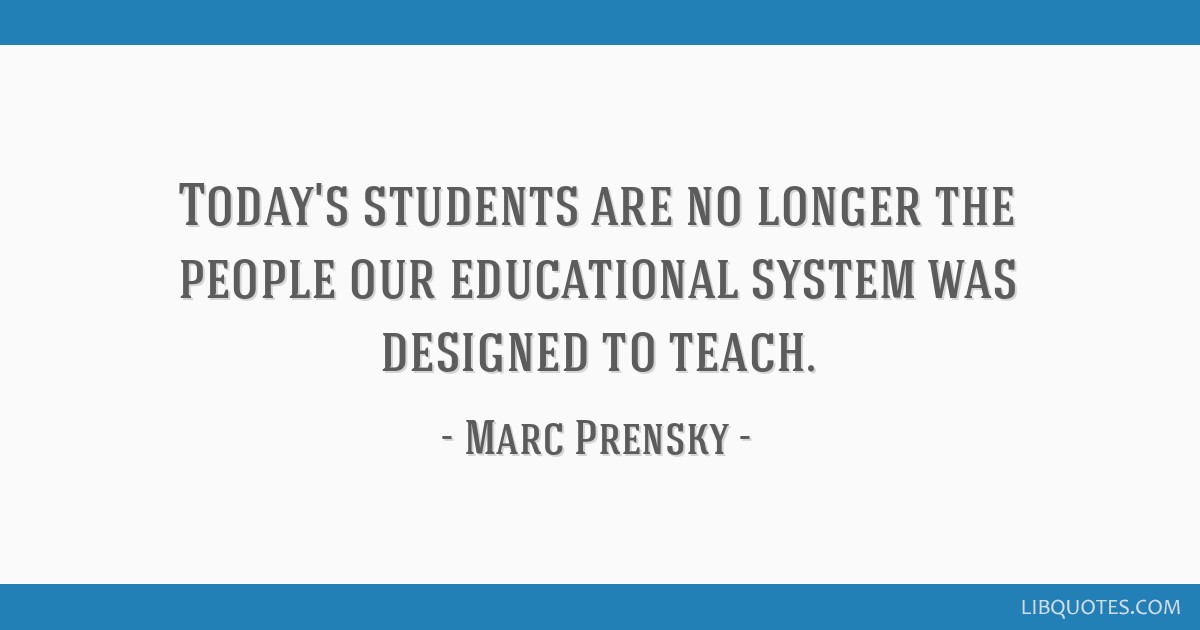
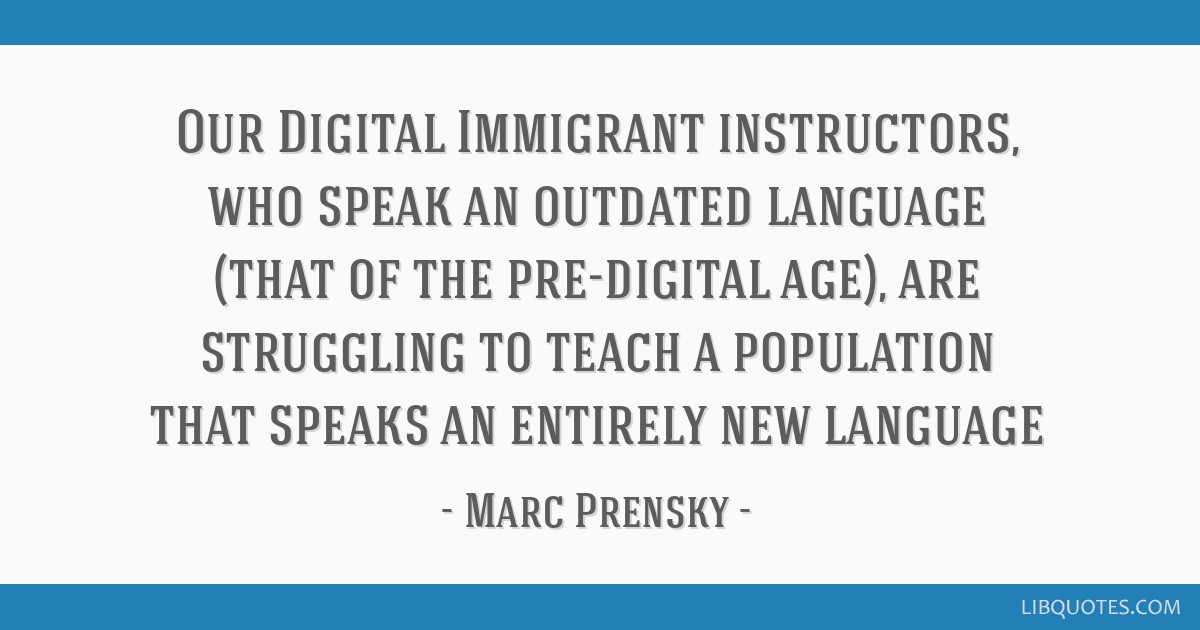
Some distinguishing comparison between digital and immigrant natives, by Marc Prensky.
Digital Natives
- Like constant connectivity
- Prefer to bring their own ubiquitous technologies
- Prefer immediacy and have short attention spans
- Use texting and instant message short-hand such as: “c u”, “how r u”, “becoz”
- Going to the internet first for information
- Prefer to socialise online and weak in face-to-face communication
Digital Immigrants
- Prefer to talk on the phone or in person
- Value ‘proper’ English when texting
- Prefer formal communication channels, such as phone, detailed emails, or face-to-face communication
- Do not understand the slang words or phrases on the internet, such as “idk”, “brb”, “t2yl”
- Printing things out as opposed to working on screen

As we look ahead, it seems we have much to consider. Technology is here whether we like it or not! As teachers we have an ethical responsibility to teach the students of today and to prepare them for tomorrow. As we consider the goods and the bads of technology, the risks and the benefits, I urge all those involved to critically reflect on the role of technology in education. I urge educators, policymakers, and stakeholders to consider not just the benefits, but also the limitations and potential downsides of educational technologies.
Our responsbility lies in building responsible digital citizens, enhancing collaboration and communication, fostering critical and ethical learning (online and offline), and managing the stress and SEL connected to technology. As we move towards education that is more impactful and engaging for students, how can we blend of the old and the new along side the tools to make informed decisions. Let's hope a blend helps to keep our students motivated by enhancing current learning strategies used in the classroom. Let's hope by learning and taking risks as teachers, we keep our Digital natives engaged and successful - emotionally, socially, and effectively!
References:
Prensky, M. (2001). Digital natives, digital immigrants. On the Horizon, 9(5), 1-6. https://www.marcprensky.com/writing/Prensky%20-%20Digital%20Natives,%20Digital%20Immigrants%20-%20Part1.pdf
Selwyn, N. (2021). Education and technology: Key issues and debates (3rd ed.). Bloomsbury Academic.
Steinert, S., & Dennis, M. J. (2022). Emotions and digital well-being: On social media’s emotional affordances. Philosophy & Technology, 35(2), 1-21. https://link.springer.com/article/10.1007/s13347-022-00530-6
Widman, S. (2017, May 31). Technology: The best or worst thing for education [Video]. TEDxYouth@BSPR. https://www.youtube.com/watch?v=J5g_9_jl6T8


I appreciate the way you are documenting your thinking and learning. You are exploring meaningful themes and ideas and have built a strong foundation for further work. You have a solid list of resources to consult from traditional and non-traditional sources. I am looking forward to seeing where your learning takes you.
ReplyDelete